We want to hear your views about Senedd TV. Take our short survey to help us improve the service.




The 13th Commonwealth Youth Parliament
Published 30/10/2026 | Last Updated 05/11/2026
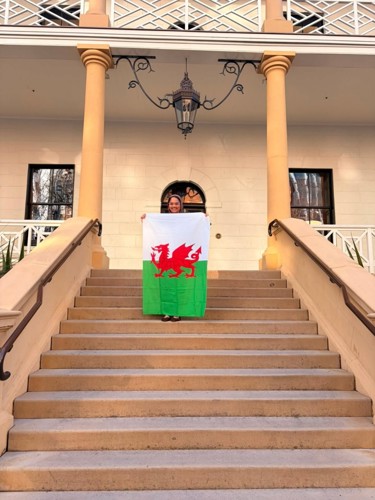
Report by Qahira Shah
Introduction
In July 2026, the Parliament of New South Wales welcomed 57 young leaders aged 18 to 29 from across the Commonwealth for the 13th Commonwealth Youth Parliament (CYP13). I am so grateful to have represented Wales and the Senedd in Sydney and have come back to Wales having learnt so much about parliamentary procedure and debate by sitting where decision-makers sit. I have also had the unique chance to meet with people from various cultures with unique experiences. Hearing from such inspiring individuals, I definitely feel a deeper sense of responsibility and partnership.
But first, what is the Commonwealth Youth Parliament? Young people from across the Commonwealth step into the role of parliamentarians, debating legislation, participating in question time and caucus meetings while exploring a chosen theme. This year’s theme was ‘Democracy in the Age of Artificial Intelligence’. This experience gave delegates from across the globe a chance to develop their knowledge and skills on how bills are proposed, amended, debated, and passed into legislation.
Day 1
The first day of the programme was a chance for all the delegates to get to know each other more, familiarise ourselves with the programme and the standing order, and explore the New South Wales Parliament. We also had time to get to know our party members, strategize and select members for roles within the party.
The first event of the programme was breakfast followed by a presentation in the Speakers’ Garden which was our first opportunity to meet everyone in person. The President of the New South Wales Legislative Council: Ben Franklin, welcomed us before introducing us to all the members of staff that were supporting us throughout the programme. We also heard from the Commonwealth Parliamentary Association who worked behind the scenes to organise the event. It was exciting to hear from Uncle Brendan who was a cultural advisor and educator to NSW Parliament who played the yidiki (or didgeridoo) and performed an Aboriginal Smoking Ceremony to mark the start of the procession.
Following on from this, we had a tour of the parliament and learnt a lot about its history and facilities. The Parliament of New South Wales is bicameral which means it has both a lower house (Legislative Assembly) and an upper house (Legislative Council). Our sittings took place in the Legislative Council chamber which is the chamber with red seats. During the tour, I noted the incorporation of Aboriginal artwork and items on display. There were also features dedicated to the women who make up the parliament which was really inspiring to witness.
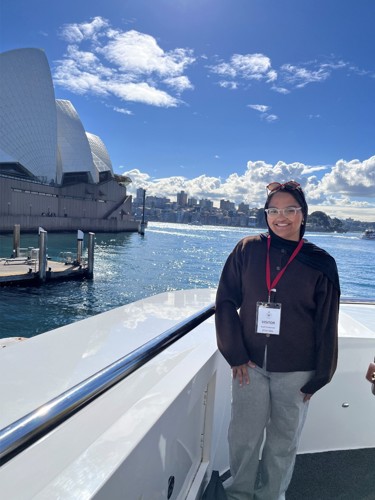
Following the tour, we had our Sydney Harbour Cruise which was such a highlight! We saw all the notable landmarks that make up the Sydney skyline, and the weather was on our side as well!
After the cruise, we had an induction on the standing order and formalities that take place during whole parliament sittings. We reconvened into the chamber to have a quick practice run of what would happen when the bell rings for all members to return to the chamber and how voting takes place.
Finally, our party had our first caucus meeting which is essentially a party meeting. There were 5 parties: Democratic Progress Party (the Government), Free Enterprise Party (the Opposition), and the crossbench: Regional Development Party, Liberty and Freedom Party, and Green Justice Movement. My party was the Democratic Progress Party. Each party elected a leader. In the Government (DPP), the leader was called the Premier (like a Prime Minister). A Deputy Premier was also selected. Each party also had a Minister/Shadow Minister/Spokesperson for Technology, Health, Housing, Climate and Environment, and Education. A Whip and Deputy Whip were also selected and their responsibility was to count all the ‘Ayes’ and ‘Nos’ following a vote in parliament, to ensure there was a member from their party to debate or speak on different sections of the bill, and to ensure all members were clued up on which way to vote.
Day 2
The second day was equally busy. We began the day with a caucus meeting before the first whole house sitting. In the chamber, we welcomed the Governor of New South Wales, Margaret Beazley, to open the Parliament of New Albion. Following her speech, each party member took either an oath or proclamation to pledge their allegiance to the people of New Albion before proceeding to sign the scroll which brought an end to the swearing in ceremony.
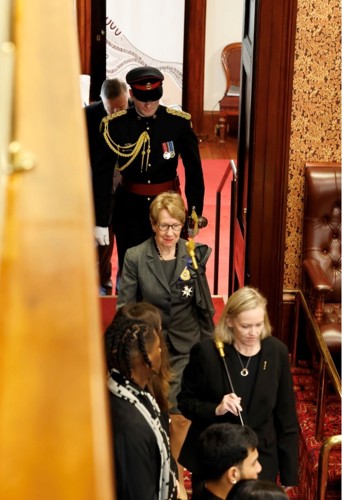
Above: Governor of New South Wales, Margaret Beazley
Now it was time to get down to business with the introduction of the ‘Artificial Intelligence and Democratic Integrity Bill 2026’ and the second reading debate. Our task was to propose the new parliamentary bill for the fictional country of New Albion, debate its efficacy and suitability, make amendments, and come to a final bill that was agreeable to the majority of delegates so that it may be passed.
After lunch, we had the incredible opportunity to hear from 4 real MPs who offered their views on how AI is being used in healthcare, elections, welfare decisions, and emergency response and they used real life examples from their own experiences. What really intrigued me was the discussion on how governments decide when it is time to intervene on generative AI companies whilst balancing the needs and safety of their constituents. Something that I hadn’t considered before was how AI deepfakes can be used during elections to mislead the electorate and it is something that governments are trying to tackle.
We had our third caucus meeting before heading into the chamber for the second reading debate which is the first formal opportunity for a legislature to discuss the main principles and general purpose of the proposed bill.
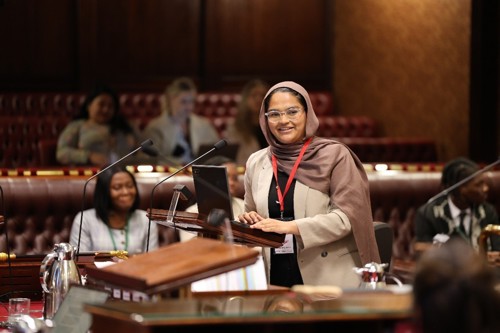
Once this was over, we had the adjournment speeches. Now, this was probably my favourite moment of the programme as delegates shed light onto issues that matter to them. This was incredibly eye-opening as many of the issues raised, I hadn’t considered previously and hearing them first-hand from people affected made me reflect more closely. Speeches ranged from how climate change is affecting Pacific Island nations despite these nations causing the least impact, gender-based violence in India, young people that are NEET in Singapore, the impacts of zoonosis on humans and wildlife in Australia, Māori representation in New Zealand - and the list goes on. I chose to do my speech on the Welsh language and how we must prevent injustice towards marginalised communities.
The whole house sitting was adjourned, and we left the parliament building for an incredible reception by the Governor of NSW at Government House. This was incredible! We each took it in turns to introduce ourselves to the Governor before going into the garden for an evening of live music and refreshments. I made some of my fondest memories with fellow participants here - all while overlooking the Sydney Harbour in the distance.
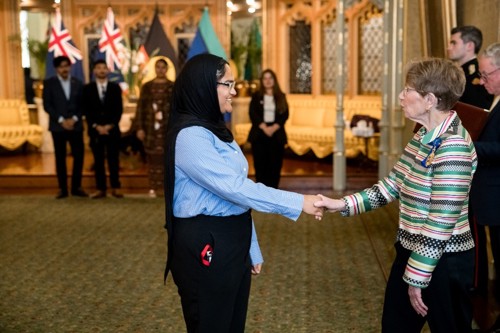
Above: Qahira Shah meets the Governor of New South Wales,
Margaret Beazley.
Day 3
On the third day of the programme, we started off with breakfast followed by our fourth Caucus meeting. On this day, we had Question Time which is where members from all the parties put forth questions to the government and scrutinise the bill. We were fortunate enough to be joined by MPs who mentored us and taught us to stand our ground, speak with conviction and how to answer tough questions. Our mentor was the Minister for Housing, Rose Jackson who is notorious for being great at answering questions. The Question Time was eventful as everyone in the chamber got really involved and were in character. There were lots of “Here Here’s” and “Shaaames” which added to the atmosphere, making it just that extra bit more realistic!
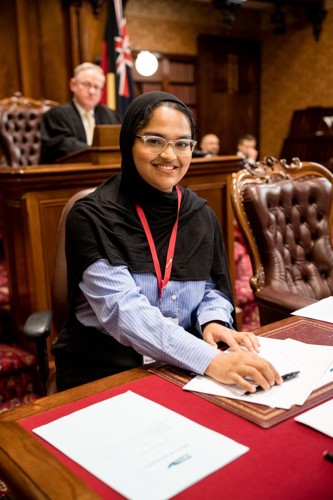
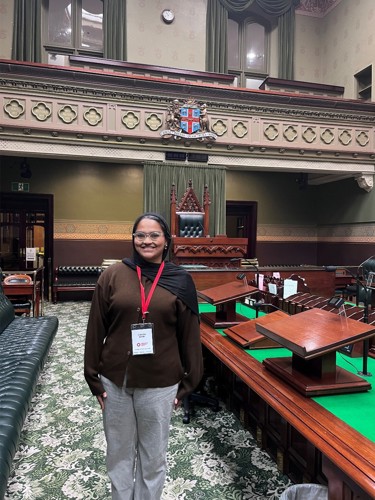
Above: Qahira Shah in the Legislative Council Chamber
Following this, we took part in the cultural immersion activity. There were 3 stations for us to take part in: hearing the history of the Yidiki (digeridoo), designing boomerangs, and weaving bracelets. These are all integral parts of the First Nations people’s identity and made for excellent souvenirs.
We were then visited by the real Premier of NSW, Chris Minns who answered questions and gave us advice. His biggest advice was to work on our communication skills.
In the evening, we had another wonderful reception at the British Consulate, complete with refreshments and more chances to network with notable figures. Many of us had amendments to draft up and submit to the parliament team by 8am the next morning so we got to work as soon as we could!
Day 4
The final day of the programme consisted of the Committee of the Whole debate and a third read of the bill. We heard all the proposed amendments and voted on whether they would be included in the bill or not. It was especially interesting to see how different delegates proposed amendments they thought would truly represent the interests of their fictional constituents in New Albion.
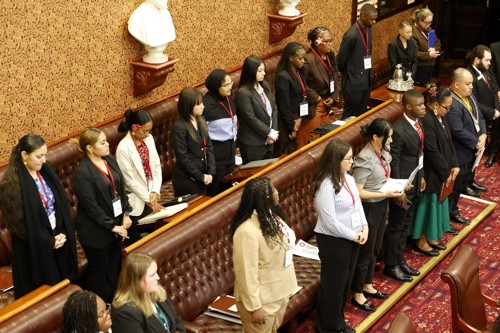
We then took a final vote after the third read as to whether we wanted the bill to be passed - and the majority voted in favour of the bill (minus the Free Enterprise Party), so the bill was successfully passed! The final whole house sitting was definitely one to remember. We rounded up the parliamentary procession by hearing felicitations speeches from several members to thank all the people who put together such a thorough, immersive, and enjoyable programme.
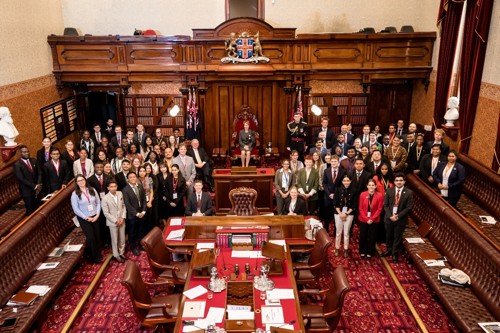
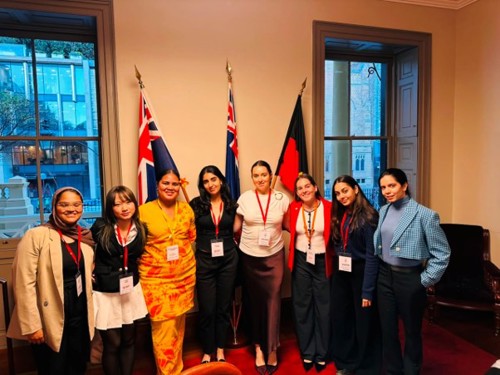
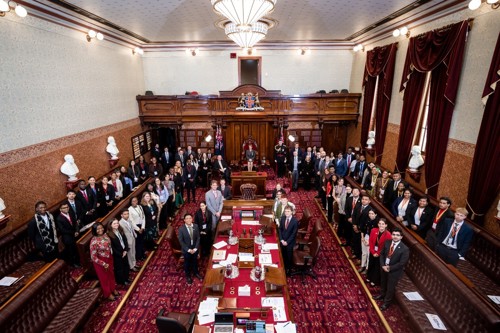
Above: Commonwealth Youth Parliament Members in the Legislative Council chamber
Everyone freshened up for the final event which was the official dinner held at the parliament. The menu was curated using local ingredients such as herbs grown on the rooftops of the parliament. There was even the chance to taste kangaroo. We received an address from Andrew Bell AC who is the Chief Justice of NSW before taking final photos. This was where we said our goodbyes as many of us had flights to catch early the following morning.
Conclusion
It is safe to say that I have made friends for life across the globe. What was most special and impressive was the talent of all the young people in the chamber. Everyone brought so many ideas, thoughts, and energy to every discussion. What people might not have seen was all the work done at night trying to complete speeches and amendments, and completing negotiations between parties before the sun was up - all while battling the jet lag!
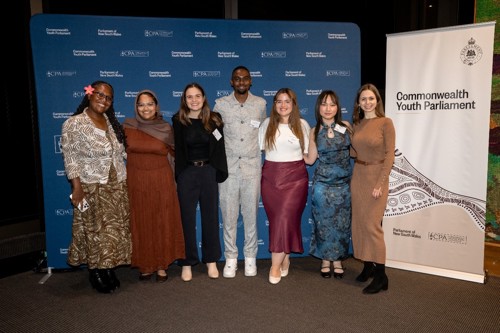
I cannot begin to thank the team at the New South Wales Parliament and Commonwealth Parliamentary Association for all their efforts to make us feel supported, welcome and make the entire experience as realistic and enjoyable as possible. I think I can speak for all participants when I say this was truly an incredible and unforgettable experience.
A massive diolch to the staff at the Welsh Youth Parliament and staff at the Senedd for their help getting me to Sydney, and for choosing me to represent Wales - none of this could have been possible without you!
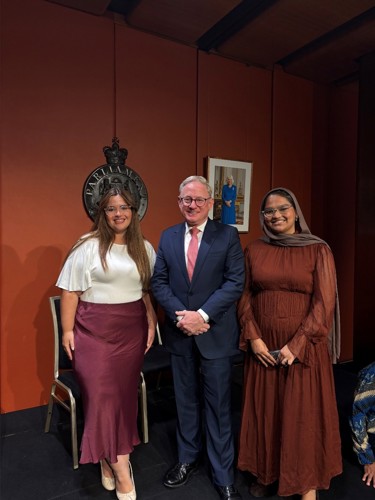
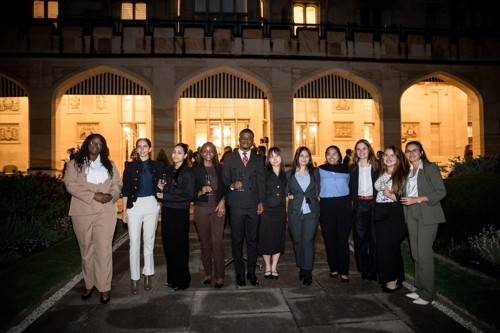
Above: Commonwealth Youth Parliament Members With Ben Franklin, President Of The Council Of New South Wales